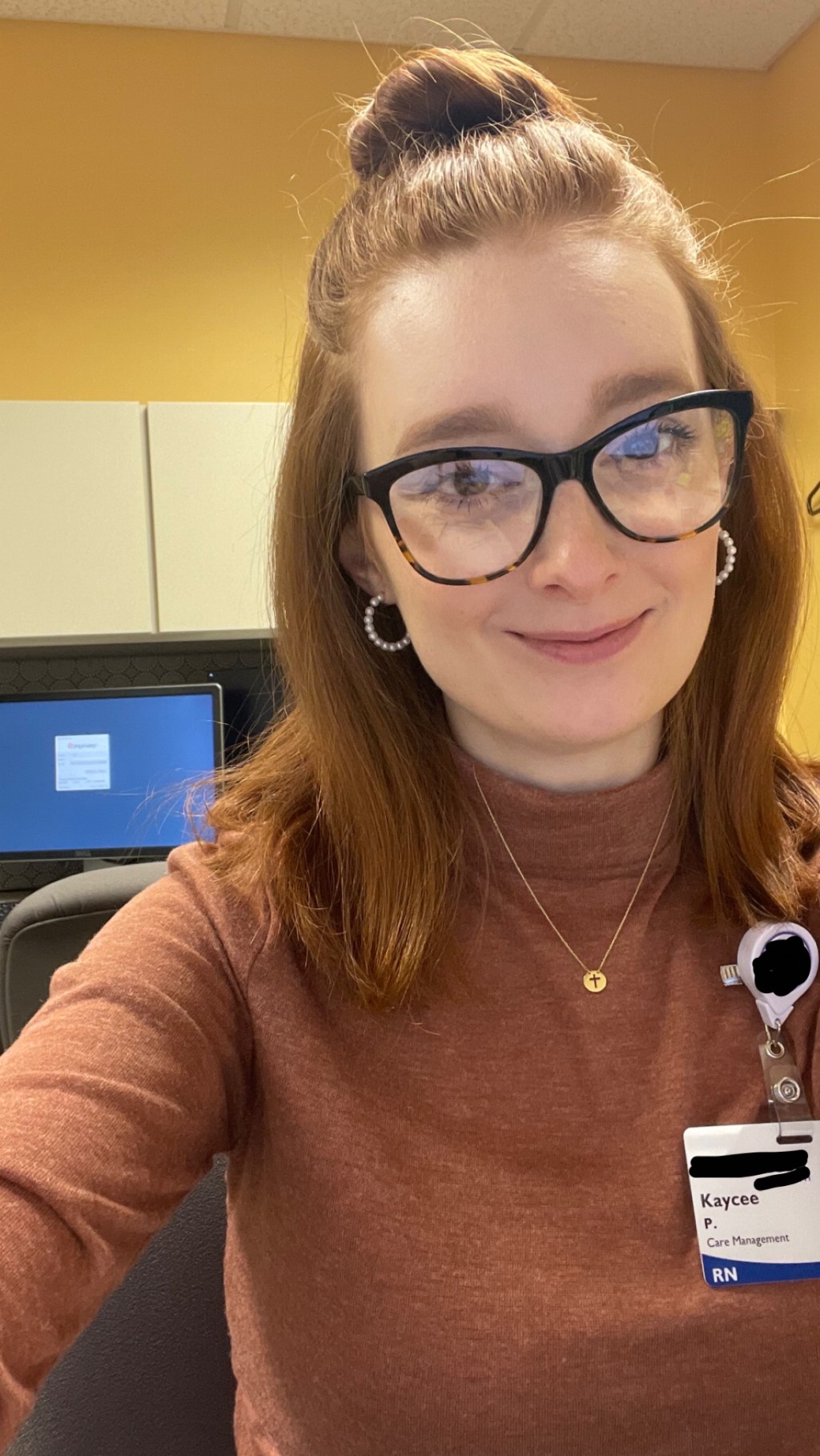
I vividly remember the day I found out what an RN Care Manager was.
I was at a patient’s bedside going over new diabetic education. There was a knock at the door, and someone asked to come into the room. The patient’s parents agreed, and a registered nurse walked into the room and introduced herself as the RN Care Manager. She was there to drop off new diabetic supplies. She explained that her role as the RN Care Manager was to help with discharge needs.
Prior to that encounter, I had never known that discharge planning was a job as a registered nurse.
A few months later I started feeling burned out in my role as a pediatric floor RN on a busy medical surgical unit. One day I was at work contemplating how I just wanted to
Quit.
My.
Job.
Suddenly, I remembered the RN Care Manager that delivered the supplies needed for my patient’s diabetic education. I then started googling RN Care Manger jobs.
The more I learned about Care Management the more I was intrigued.
I found out that Care Management is indeed discharge planning. A CM nurse assists in getting resources to help a patient discharge from a hospital. I also learned that there are different types of RN CMs, inpatient, outpatient, and telephonic. The more research I did on this specific job type, the more I wanted to do it.
The hospital I was working at required a BSN to work as a RN CM and I was not yet finished with my BSN program. I found an outpatient RN CM job at a primary care Family Clinic that was affiliated with a nearby health system. I interviewed and was offered the position in the following weeks.
In my new role I was trained to be an outpatient RN Care Manager and learned a lot about what exactly an RN Care Manager does through the ACMA– or American Case Management Association.
The ACMA defines Care management as
“Case Management is a dynamic process that assesses, plans, implements, coordinates, monitors, and evaluates to improve outcomes, experiences, and value. The practice of case management is professional and collaborative, occurring in a variety of settings where medical care, mental health care, and social supports are delivered. Services are facilitated by diverse disciplines in conjunction with the care recipient and their support system. In pursuit of health equity, priorities include identifying needs, ensuring appropriate access to resources/services, addressing social determinants of health and facilitating safe care transitions. Professional case managers help navigate complex systems to achieve mutual goals, advocate for those they serve, and recognize personal dignity, autonomy, and the right to self-determination.”
I like to think of care management as the missing link in healthcare. Nurse care managers help find the missing link in communication, delays in care, and education to help assist the patient to their end goal.
Whether that’s
· obtaining DME (durable medical equipment)
· getting high-cost medications
· assisting with transportation to appointments
· discharging from the hospital
and more.
There’s so much to case management and that’s why I really enjoy it. I enjoy helping patients, the bedside nurses, and the healthcare team in general.
It’s so satisfying to be able to identify a patient’s discharge goals and help them reach that goal.
In the coming months I’ll be sharing more personal experiences I’ve had in my role as a care manager and how I’ve overcome some difficult discharge circumstances.
 Nurse Kaycee Here
Leave a comment